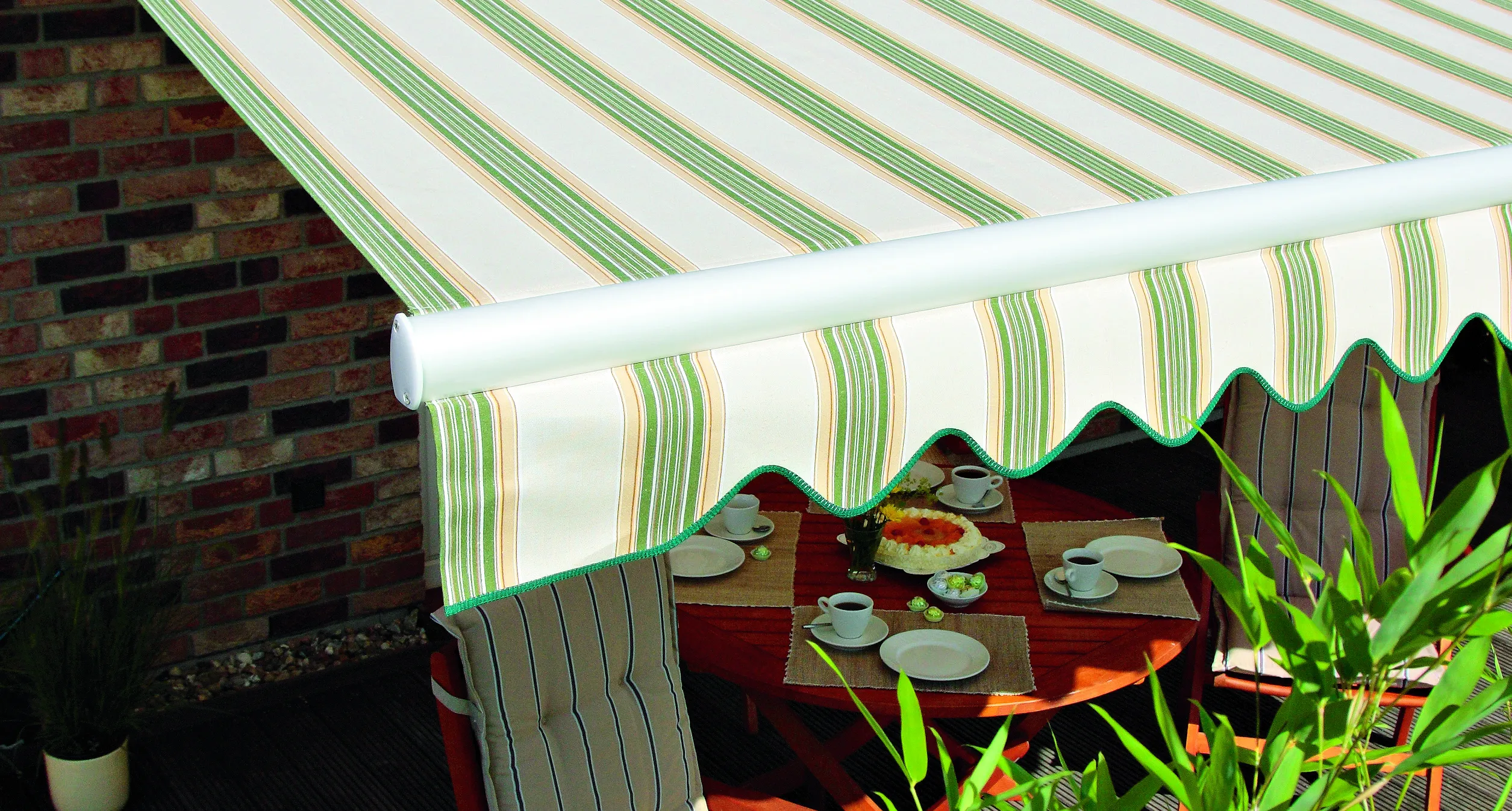
Thank you for choosing Made in the Shade! Your outdoor retractable awning was selected to add shade, comfort, and usable outdoor living space to your home. Like any exterior product, proper use and routine care will help extend the life of the fabric, frame, motor, and controls, and keep everything operating smoothly.
A retractable awning is a movable shade system, not a permanent roof, pergola, or patio cover. The simplest rule to remember: Use it for shade. Retract it for weather. Clean it regularly. Call your local Made in the Shade franchise if something does not look or sound right.
This guide applies generally to outdoor retractable awnings from multiple Made in the Shade suppliers. Wind sensor settings, fabric pitch ranges, sensor features, and warranty terms vary by manufacturer, so always check the specific owner’s manual for your awning.
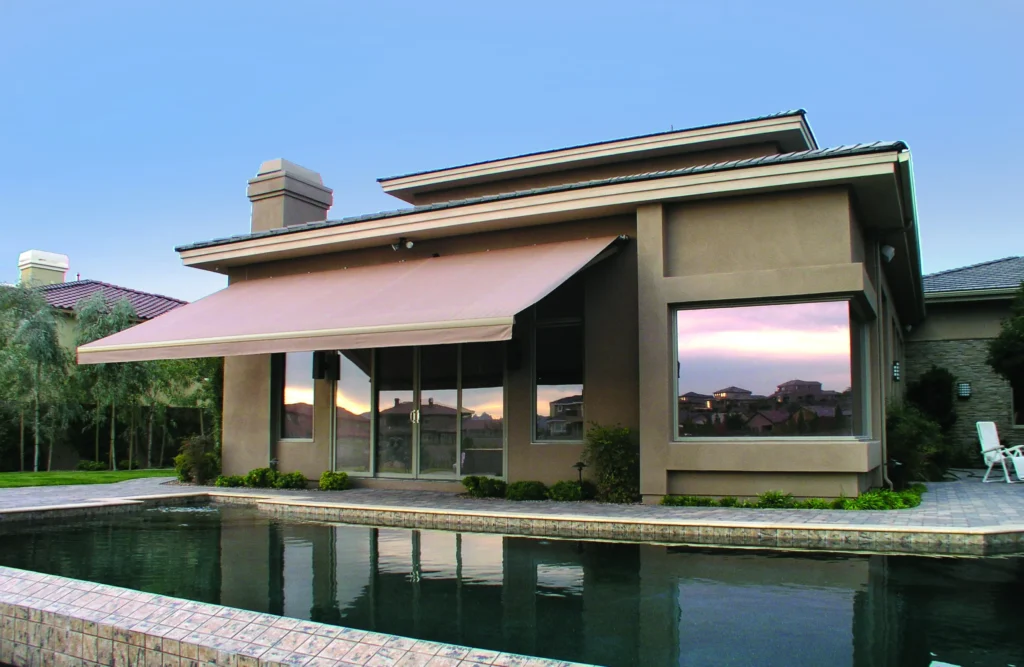
When to Use Your Awning
- Best used for shade, glare reduction, heat reduction, and patio comfort during calm conditions.
- Sunny days, light breezes, and mild weather.
- Light passing rain, depending on awning pitch and manufacturer guidance.
- Outdoor entertaining and hot afternoons when the patio or windows receive direct sun.
- Extend the awning when shade is needed and retract it when it is not.
When to Retract Your Awning
Retract the awning whenever weather becomes unsafe or unpredictable:
- Strong wind or gusts
- Heavy rain
- Thunderstorms
- Hail
- Snow or ice
- Tropical weather or high-wind advisories
- When leaving home for an extended period
- Overnight, if storms or wind are possible
- Any time the awning is bouncing, shaking, straining, or moving unusually
Rule of thumb: if you would bring in lightweight patio cushions, umbrellas, or loose outdoor items, you should strongly consider retracting the awning.
Wind, Rain, and Weather Use
Wind
- Wind is the biggest risk to a retractable awning, especially when fully extended.
- Do not rely on how the weather feels at ground level. Wind catches the front bar and fabric differently than it feels on the patio.
- A wind sensor is a helpful feature, but it may not prevent all damage in sudden or extreme conditions, and settings vary by manufacturer. The sensor may force the awning to retract during high winds.
- The safest approach is to retract before conditions become questionable.
Rain and Pitch
- Some awnings handle light rain if they have proper pitch, but they are not a permanent waterproof roof.
- A steeper pitch helps rain run off and reduces pooling; a shallow pitch lets water collect more easily.
- Heavy rain can cause water to pool on the fabric. Pooling water adds weight and can stretch the fabric, bend arms, damage brackets, or strain the motor.
- Do not use the awning as a rain shelter during heavy or steady rain.
Snow and Ice
- Do not use retractable awnings in snow or freezing conditions.
- Snow accumulation can quickly create excessive weight and damage the frame, fabric, and arms.
When Wet
- It is acceptable to retract a wet awning if weather requires it.
- Once the weather clears, extend the awning again so the fabric can fully air dry.
- Do not leave the awning retracted long-term while wet. Trapped moisture can lead to mildew, odor, and staining.
Basic Day-to-Day Use
- Extend and retract the awning smoothly.
- Do not force a manual crank.
- Keep furniture, grills, ladders, branches, plants, doors, and décor clear of the awning path.
- Watch the awning while operating to make sure nothing is obstructing movement.
- Stop operation if you see binding, uneven movement, unusual noise, or obstruction.
- Retract the awning when not in use for long periods.
- Keep children away from remotes, switches, and crank handles.
- Do not retract or extend the awning while anyone is touching, leaning on, or standing under the front bar.
- For motorized awnings, avoid repeated rapid operation. Motors may have thermal protection and can temporarily stop if overheated; allow time to cool before trying again.
Cleaning Sunbrella Outdoor Awning Fabric
Many outdoor awnings use Sunbrella or similar solution-dyed acrylic fabric. These materials are made for outdoor exposure, but routine cleaning is still important. The best maintenance is keeping dirt, leaves, pollen, and debris from becoming embedded in the fabric.
Light Cleaning
- Brush off loose dirt and debris while the fabric is dry.
- Hose the fabric with clean water.
- Prepare a solution of mild soap and water.
- Gently clean with a soft bristle brush or sponge.
- Rinse thoroughly to remove all soap residue.
- Allow the fabric to air dry completely before retracting for long-term storage.
Mildew or Stubborn Stains
For Sunbrella fabric, mildew or stubborn stains may typically be cleaned with:
- 1 cup bleach + 1/4 cup mild soap per 1 gallon of clean water
- Apply the solution and let it soak for up to 15 minutes.
- Clean gently with a soft bristle brush, rinse thoroughly, and allow the fabric to air dry.
Important notes:
- Do not clean in direct sun or extreme heat. The solution can dry too quickly to work properly and may leave marks.
- Always rinse thoroughly.
- Protect nearby plants, furniture, and surfaces from runoff.
- Do not use bleach on non-Sunbrella fabrics unless the fabric manufacturer allows it.
- Test a small, inconspicuous area first if you are unsure of the fabric type.
- Never mix bleach with ammonia or other cleaners.
Mildew usually grows on dirt and organic matter sitting on the fabric, not on the fabric itself. Keeping the awning clean helps prevent it from returning.
Re-Applying Fabric Protectant
- Sunbrella’s factory water- and stain-repellent finish wears down over time, especially after a deep or bleach cleaning.
- After the fabric is clean and fully dry, a fabric guard made for solution-dyed acrylic (such as 303 High Tech Fabric Guard) may be reapplied to restore water and stain repellency.
- Re-treat after a deep cleaning, or roughly every couple of years, following the product and manufacturer instructions.
What Not to Use
- Pressure washers
- Harsh solvents
- Abrasive cleaners
- Wire brushes
- Strong degreasers
- Dry cleaning chemicals
- Fabric softeners
- Undiluted bleach
- Automatic car wash brushes or rotary scrubbers
A pressure washer may seem convenient, but it can damage fabric, seams, stitching, valances, and protective finishes. Use a garden hose instead.
Cleaning the Frame and Hardware
Clean the frame, arms, brackets, and front bar periodically using clean water, mild soap, a soft cloth, and a non-abrasive sponge. Avoid harsh chemicals or abrasive pads on powder-coated or painted metal.
Check for:
- Loose debris near the roller tube
- Leaves or twigs caught in the arms
- Bird nests or insects
- Dirt buildup around brackets
- Unusual movement, rubbing, or noise
Do not disassemble arms, brackets, springs, or motor components. Awning arms are under tension and should only be serviced by a qualified professional.
Motorized Awning Care
- Keep remotes in a safe, dry location.
- Replace remote and sensor batteries as needed; weak batteries can cause inconsistent operation.
- Do not allow children to operate the awning unattended.
- Watch the awning during operation.
- Stop immediately if the awning binds, makes unusual noise, moves unevenly, or does not fully extend or retract.
- Do not keep pressing the remote if the awning is not responding.
- If the motor stops after repeated use, allow it to cool before trying again. Many motors include thermal protection.
- Use common sense with wind sensors. They are helpful, but should not replace judgment. If the weather looks questionable, retract the awning.
- Test wind, sun, and rain sensors periodically according to the manufacturer’s instructions.
Grills, Fire Pits, and Heat Sources
- Do not place grills, smokers, fire pits, heaters, or open flames directly under or too close to the awning.
- Heat, smoke, grease, and sparks can damage the fabric, stain the valance, affect stitching, and create a fire hazard.
- Even if the awning sits high above a grill, smoke and grease can collect on the underside of the fabric over time. Keep cooking appliances away whenever possible.
Hanging Items from the Awning
- Do not hang plants, lights, fans, swings, decorations, or other items from the awning arms, front bar, or fabric unless specifically approved by the manufacturer.
- Retractable awnings are designed to support their own system components, not additional weight.
Trees, Sap, Birds, and Pollen
Outdoor awnings are exposed to natural debris such as tree sap, pollen, leaves, bird droppings, insects, dust, and airborne pollution. Clean these as soon as reasonably possible; the longer organic material sits on the fabric, the harder it is to remove. Gently remove debris, rinse the area, and spot clean with mild soap and water.
Normal Characteristics Over Time
Some changes are normal with outdoor awnings and do not always mean the product is defective:
- Minor wrinkles or waves in the fabric
- Slight fabric movement in light wind
- Dust or pollen buildup
- Normal fading over many years of sun exposure
- Minor water marks after rain
- Valance movement
- Slight changes in fabric tension over time
However, torn fabric, bent arms, loose brackets, severe sagging, motor failure, or uneven movement should be inspected.
Seasonal Maintenance Checklist
Inspect and clean the awning at least twice per year, ideally in spring before heavy use, in fall before long periods of non-use, and after major storms or heavy pollen seasons.
- Brush off loose dirt and debris.
- Rinse the fabric and spot clean as needed.
- Clean the frame.
- Check for fabric tears or seam issues.
- Make sure the awning extends and retracts evenly.
- Check remote and sensor batteries.
- Confirm sensors are working, if applicable.
- Make sure mounting brackets appear secure.
- Look for rubbing, sagging, or unusual movement.
Before Winter / Off-Season
- Fully clean and completely dry the awning before extended non-use.
- Retract the awning for the season once it is dry.
- In colder climates, keep the awning retracted through snow and freezing conditions.
Do’s and Don’ts
Do
- Use your awning for shade and sun protection.
- Retract during strong wind, storms, hail, snow, or heavy rain.
- Allow wet fabric to dry when conditions are safe.
- Keep the fabric clean and free of embedded debris.
- Clean Sunbrella and similar fabrics with mild soap, water, and a soft bristle brush.
- Reapply fabric protectant after deep cleaning or every couple of years.
- Keep the awning path clear.
- Monitor the awning while it operates.
- Check batteries in remotes and sensors.
- Use common sense with wind sensors.
- Call Made in the Shade if something looks loose, bent, torn, or unsafe.
Don’t
- Do not leave the awning extended during strong wind or storms.
- Do not use the awning as a rain shelter during heavy or steady rain.
- Do not allow snow or ice to accumulate on the awning.
- Do not pressure wash the fabric.
- Do not use harsh chemicals, abrasive cleaners, wire brushes, or solvents.
- Do not clean the fabric in direct sun or extreme heat.
- Do not retract the awning long-term while wet.
- Do not hang plants, lights, fans, swings, or décor from the arms or front bar.
- Do not place grills, smokers, heaters, fire pits, or open flames under the awning.
- Do not force a manual crank or keep pressing the remote if the awning is not moving properly.
- Do not attempt to repair arms, brackets, springs, or motors yourself.
- Do not assume outdoor fabric is maintenance-free.
Safety Notes
A retractable awning provides shade and comfort, but it is not a substitute for a roof, pergola, permanent patio cover, or storm-rated protection.
- Awning arms, brackets, and springs are under tension and can be dangerous if handled incorrectly.
- Keep children away from remotes, switches, crank handles, and moving parts.
- Keep the awning path clear before operating.
- Do not operate the awning while anyone is touching or leaning on the front bar.
- Stop operation immediately if something is caught in the awning.
- Keep grills, fire pits, heaters, and open flames away from the fabric.
When to Call for Service
Contact your local Made in the Shade if:
- The awning will not extend or retract.
- The motor runs but the awning does not move properly.
- The awning moves unevenly.
- The arms appear bent.
- The fabric is torn.
- The front bar is not level.
- The awning makes grinding, popping, or unusual noises.
- The awning was left out during strong wind or a storm.
- The mounting brackets appear loose.
- The fabric is sagging significantly.
- A sensor is not working correctly.
- The awning stops responding to the remote.
Warranty / Service Reminder
If your awning is not operating correctly, stop using it and contact Made in the Shade before the issue becomes worse.
Proper use and routine maintenance help protect your investment and may be required to keep your product warranty in good standing. Damage caused by misuse, wind or storm exposure, excessive moisture, improper cleaning products, pets, pests, forced operation, unauthorized repairs, or lack of maintenance may not be covered by warranty.
Please contact your local Made in the Shade location for details regarding product and labor warranty coverage. Each Made in the Shade location is independently owned and operated, and labor or service warranties may vary by location. Manufacturer warranties are provided by the applicable vendor and may differ by product, brand, or manufacturer.
With proper use, routine cleaning, and good judgment during wind and storms, your retractable awning can provide years of comfort and outdoor enjoyment!